How to Set Up a Multi-Box “Landing Strip” for Aging Cats
Aging cats often need a little more help than they did when they were younger. A litter box that was perfectly comfortable five years ago can suddenly become difficult to enter, awkward to turn around in, or painful to climb out of. For cats with arthritis or stiff joints, even a short walk across a slippery floor after using the litter box can be uncomfortable.
That is where a multi-box “landing strip” can make a real difference.
Instead of treating the litter box as a single piece of equipment, you create a small, easy-to-navigate toilet area with multiple boxes, absorbent mats, stable surfaces, and a clear path. The goal is to reduce unnecessary movement, prevent litter from being tracked throughout the house, and make the entire experience easier for an older cat.
In this guide, you will learn how to setup a multi-box “landing strip” for aging or arthritic cats, including where to position the boxes, what size and shape to choose, which litter works well, and why stainless steel can be a better long-term choice than plastic.
The Core Problem With Old Materials
Plastic litter boxes are popular because they are inexpensive, lightweight, and widely available. Unfortunately, they can develop problems as they age.
The biggest issue is scratching.
Cats dig, scrape, and rake litter with their claws every day. Over time, those claws can leave hundreds of tiny scratches across the plastic surface. Even when the scratches are difficult to see, they can create small grooves and rough areas where urine residue, organic material, and bacteria can remain.
Cleaning becomes harder as the box gets older.
Plastic can also retain smells. Urine contains compounds that can become particularly noticeable when residue remains on or within scratched surfaces. A box may look clean but still have a persistent “cat litter” smell.
This can create a frustrating cycle. The owner cleans the box, the smell improves temporarily, and then the odor returns.
Stainless steel offers a much easier surface to maintain. Quality stainless steel is smooth, non-porous, resistant to scratching under normal litter-box use, and does not absorb odors in the same way plastic can. When properly cleaned, it provides a hygienic surface that is much less likely to hold onto unpleasant smells.
For an aging cat, however, hygiene is only part of the equation. Stability matters too. A lightweight plastic box can move when a senior cat steps into it, particularly if the floor is smooth. That movement may make an arthritic cat nervous about using the box.
A good landing strip therefore needs to address comfort, traction, cleanliness, accessibility, and stability together.
How to Setup a Multi-Box “Landing Strip” for Aging or Arthritic Cats
1. Choose a Convenient Location
Start by observing where your cat naturally spends most of its time.
For an older cat, avoid making the litter area unnecessarily difficult to reach. A box on another floor of the house may technically be accessible, but stairs can become a serious obstacle for a cat with stiff joints.
Ideally, place the landing strip somewhere quiet but easy to reach.
Avoid locations beside loud washing machines, busy doorways, or areas where the cat can easily be startled.
If your home has multiple levels, consider having litter facilities on more than one level rather than expecting an elderly cat to climb stairs whenever it needs to go.
2. Use More Than One Box
The purpose of a multi-box setup is redundancy and convenience.
Instead of forcing the cat to use one specific box, provide two or more boxes within a sensible distance of one another.
This can be particularly useful if your cat sometimes hesitates before entering a box or has difficulty changing direction.
A second box can also help if one box needs to be cleaned.
For multi-cat households, additional boxes can reduce competition and give an older cat more opportunities to toilet without being disturbed.
3. Make Entry Easy
Accessibility is one of the most important considerations.
High-sided boxes can help contain litter and urine, but excessively high walls can be difficult for an arthritic cat to climb over.
Look for a design that provides enough containment without creating a large step.
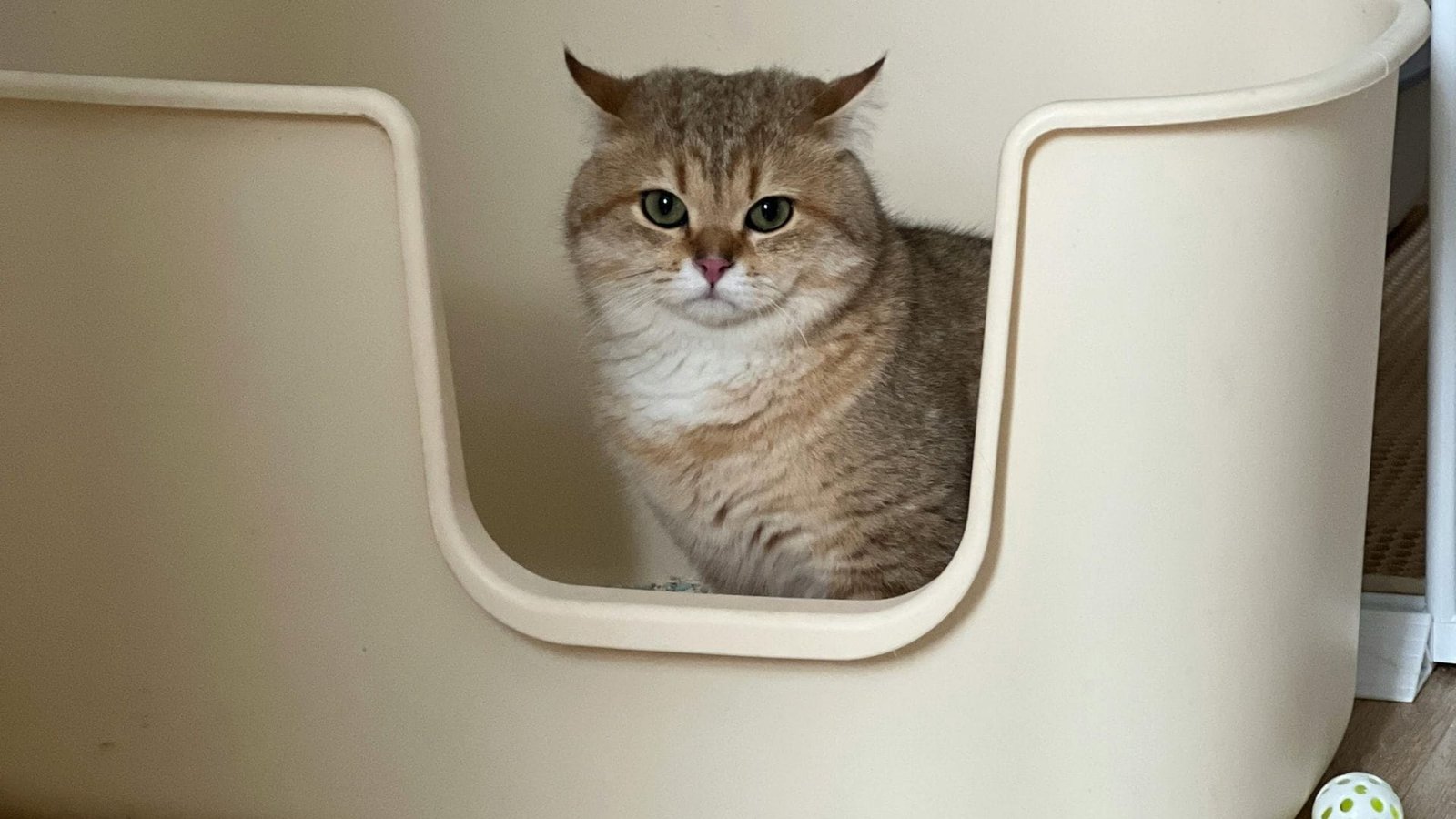
An entrance with a lower front section can be especially helpful. The cat should be able to walk into the box rather than having to make a significant jump.
At the same time, the box should be large enough for the cat to comfortably turn around.
4. Create the Landing Strip
Place a washable litter mat immediately outside each box.
Then arrange the boxes and mats so your cat has a short, stable route from the litter box to the surrounding floor.
Think of the area as a small runway.
The cat exits the box, steps onto a non-slip surface, crosses the mat, and reaches the normal floor without having to walk through loose litter.
This arrangement can reduce tracking and may also provide extra traction for cats whose joints are not as steady as they once were.
Avoid mats with deep loops that can catch claws. A relatively flat, washable surface is often easier for an older cat to negotiate.
5. Choose Litter Carefully
Senior cats may become more particular about litter texture.
If your cat has always preferred a particular litter, avoid changing it suddenly. When experimenting, introduce the new litter gradually.
Fine, soft litter may be more comfortable for sensitive paws, while low-dust formulas can help keep the surrounding area cleaner.
Regardless of the type, scoop regularly.
A dirty box can discourage a cat from using it and may lead to accidents elsewhere.
6. Keep the Boxes Stable
Stability is essential.
A box that slides across the floor when a cat steps inside can undermine the entire purpose of an accessible setup.
Look for stainless steel boxes with non-skid rubber feet or use an appropriate non-slip base underneath the box.
The landing strip itself should not slide either.
If your cat hesitates at the entrance, watch what happens when it steps inside. You may discover that the problem isn’t the height of the box at all—the entire box may be moving.
Why Stainless Steel Makes Sense for a Landing Strip
A stainless steel litter box can be particularly useful in a senior-cat setup because it combines accessibility with easy maintenance.
The smooth surface is easier to wipe and wash thoroughly. Unlike scratched plastic, quality stainless steel does not provide the same network of grooves where residue can accumulate.
It also does not absorb litter-box odors in the way porous or heavily scratched plastic can.
Another advantage is durability. A good stainless steel box can withstand years of digging, scooping, washing, and daily use without becoming permanently impregnated with the smell of its previous occupants.
For owners building a dedicated landing strip, that longevity can make stainless steel a practical investment.
Top Recommendations and Key Takeaways
When designing a landing strip for an aging or arthritic cat, focus on the entire environment rather than simply buying a different litter box.
Look for:
- Low or easy-access entry for stiff joints.
- Adequate box size so the cat can comfortably turn around.
- High sides where appropriate to control litter and urine.
- Rounded corners that are easier to clean.
- Non-skid rubber feet to prevent movement.
- Smooth stainless steel surfaces that resist odor retention.
- Washable litter mats around the boxes.
- Low-dust litter if your cat prefers it.
- Quiet positioning away from household disturbances.
- Easy access without unnecessary stairs or obstacles.
The material of the box deserves particular attention.
Plastic may be cheap initially, but repeated scratching and odor retention can make older boxes increasingly unpleasant to maintain. Stainless steel is more hygienic, durable, and resistant to lingering odors, making it a strong choice for a litter area that needs to remain clean for years.
For an aging cat, small environmental improvements can have a surprisingly large impact. A stable box, gentle entrance, comfortable litter, and non-slip landing area can turn an awkward toilet routine into a much easier one.
Frequently Asked Questions
How many litter boxes should an aging cat have?
There is no single number that works for every household. A multi-box arrangement can be useful because it gives an older cat options and reduces the distance it needs to travel. Multi-cat households generally benefit from providing additional boxes to reduce competition.
Should an arthritic cat have a low-sided litter box?
Usually, an easy-access entrance is helpful because it reduces the height the cat must step over. However, the sides should still provide adequate protection against litter scatter and urine spray.
Is stainless steel better than plastic for cat litter boxes?
For many owners, yes. Stainless steel is smooth, durable, easy to clean, and resistant to odor retention. Plastic can become scratched over time, making thorough cleaning more difficult and allowing unpleasant smells to linger.
What should go around the litter boxes?
Use a stable, washable litter mat with a surface that is comfortable for your cat’s paws. For arthritic cats, avoid unstable or heavily textured mats that may make walking difficult.
Conclusion
A well-designed multi-box landing strip gives an aging or arthritic cat easier access, better traction, and a more comfortable path after using the litter box. Pairing that setup with a durable stainless steel litter box can also make the area significantly easier to keep clean and free from lingering odors.
If your cat is struggling with an old, scratched, smelly plastic box, consider making the switch to a cleaner stainless steel litter box and build the landing strip around your cat’s comfort.